


Purchasing Masked Palm Civets in Khanh Hoa: Pricing, Legal Clearance, and Sustainable Off-Take Solutions
An insider perspective on civet purchasing in Khanh Hoa province—covering meat and breeding grading standards, forestry paperwork, and stable cooperative partnerships.
Index
Current Dynamics of Civet Purchasing Across Khanh Hoa Province
Grading Standards and Selection Criteria in Civet Purchasing
Regulatory Compliance: The Pillar of Legitimate Civet Purchasing
Practical Field Guidelines Before Collection Day
Preserve Digestive Stability and Stress Resilience
Pre-Sort Into Dedicated Isolation Pens
Sustainable Value-Chain Partnerships with Hop Tac Xa Chan Nuoi Ninh Hoa
Raising a palm civet from a vulnerable young kit to a robust, marketable adult requires endless patience and dedicated craftsmanship. Every late-afternoon feeding, every routine check on seasonal breeding heats, and every nervous rainy night monitoring digestive shifts tests the dedication of local breeders. Yet, bringing up a thriving stock is only half the battle. For breeders across Khanh Hoa, the defining milestone that dictates profitability is securing a reputable, transparent civet purchasing partner capable of offering stable commercial off-take contracts and guaranteed market pricing.
Khanh Hoa’s warm coastal-inland microclimate offers exceptional conditions for captive wildlife farming. However, when the time comes to sell off finished stock, unorganized farmers often face volatile regional brokers, sudden downward price negotiations, or debilitating regulatory barriers regarding official Forest Protection Department transport clearance. To build lasting wealth from your pens, it is essential to understand how professional civet purchasing networks evaluate livestock, what paperwork keeps your farm safe, and how joining an organized cooperative ecosystem shields your investment.
Current Dynamics of Civet Purchasing Across Khanh Hoa Province
Throughout districts such as Ninh Hoa, Van Ninh, Dien Khanh, and Cam Ranh, civet farming operations range from small family enclosures with a dozen animals to modern facilities maintaining hundreds of commercial and breeding cages. When ready for market liquidation, farmers encounter two starkly contrasting purchasing pathways:
- Speculative Local Middlemen: These buyers pop up opportunistically when specialty restaurants experience temporary shortages. While they provide fast cash on the spot, their demand is erratic and unpredictable. When regional consumption dips, they abruptly halt all purchasing activity or exploit minor cosmetic blemishes to aggressively drive down your farm-gate prices.
- Structured Cooperative Off-Take Channels: Professional agricultural cooperatives establish long-term purchasing commitments backed by written agreements, planned harvesting schedules, and transparent scale weigh-ins. Even though they require disciplined husbandry and strict legal traceability, they guarantee reliable working capital recovery and uninterrupted seasonal off-take security.
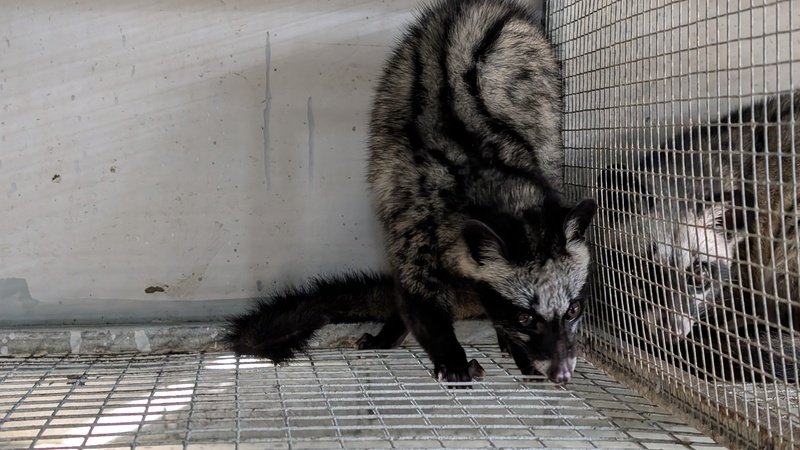
The greatest pitfall for independent smallholders remains the lack of official farm registration and breeding logbooks verified by local forest rangers. When an entire batch of commercial civets reaches peak weight (3.0 kg to 5.0 kg), legitimate high-volume buyers arriving with specialized transport vehicles cannot legally load unverified animals. Caught in a paperwork bottleneck, farmers are frequently forced into underground distress sales at heavily discounted rates, losing a substantial portion of their hard-earned yearly profit.
Grading Standards and Selection Criteria in Civet Purchasing
In the professional livestock trade, a civet’s true value is not determined solely by the balance scale. Seasoned buyers instantly assess agility, ocular clarity, pelt density, bone frame, and scent gland condition. At Hop Tac Xa Chan Nuoi Ninh Hoa (CNNH), our direct farm-gate purchasing evaluations rely on objective, transparent benchmarks so that every farmer receives fair, merit-based compensation for their dedicated care.
| Classification Tier | Target Weight Range | Physical Characteristics | Primary Utilization |
|---|---|---|---|
| Grade 1 Commercial Meat | 3.0 kg – 5.0 kg | Agile, bright eyes, sleek glossy fur, dense muscle tone, full legal forestry pedigree | Premium culinary distribution and high-end hospitality contracts |
| Grade 2 Commercial Meat | Under 3.0 kg or over 5.5 kg | Healthy but overweight from excessive starch or underweight; minor fur scratches | Short-term dietary recalibration or local off-take channels |
| Young Breeding Stock | 1.8 kg – 2.5 kg (6–8 months) | Robust skeletal structure, well-defined reproductive organs, alert temperament | Establishing new farm pens and scaling breeding herds |
| Proven Breeding Pairs | Documented 1–2 litters | Exceptional maternal instincts, gentle nature, non-aggressive to kits, abundant milk | Immediate turnkey broodstock expansion |
When animals are conditioned within the ideal 3.0 kg to 5.0 kg range on structured diets of boiled chicken breasts, fresh marine or freshwater fish, ripe bananas, and digestive probiotics, their muscle-to-fat ratio hits peak culinary grade. In contrast, animals overfed with cheap carbohydrate pastes accumulate thick layers of subcutaneous grease, which lowers their market score. Adhering to balanced nutritional schedules directly protects your harvest revenue during the final weigh-in.
Regulatory Compliance: The Pillar of Legitimate Civet Purchasing
The common palm civet and masked palm civet (Viverricula indica and Paguma larvata) are categorized under Vietnamese law as common forest wildlife. Consequently, breeding, trading, slaughtering, and transporting these animals are subject to rigorous oversight by the Forest Protection Department (Kiem Lam).
Purchasing wild-caught stock from unlicensed poachers or unverified online traders poses fatal risks for your business. When your herd expands and you seek high-volume purchasing transactions, unregistered animals cannot receive legitimate transportation waybills (bảng kê lâm sản). Without legal verification, inter-district and inter-provincial shipping constitutes an illegal act, exposing the farm to heavy statutory fines and complete herd confiscation.
- Legitimate Origin Documentation: Complete parent stock pedigree certificates issued by a licensed wildlife breeding facility.
- Herd Fluctuation Logbooks: Continuously updated records of births, mortalities, and internal transfers verified periodically by local forestry officers.
- Facility Environmental & Safety Clearances: Written records verifying that pen configurations satisfy humane spacing, ventilation, and biosecurity regulations.
- Official Forestry Dispatch Clearances: Verified transport declarations issued immediately prior to bulk commercial civet purchasing transfers.
By eliminating legal vulnerabilities at the root, breeders unlock the ability to conduct legitimate commercial civet purchasing contracts with nationwide restaurant chains, processing hubs, and regional agricultural organizations.
Practical Field Guidelines Before Collection Day
To prevent weight shrinkage, stress-induced trauma, and physical damage when our civet purchasing team arrives on site, breeders should apply these tested field protocols:
Preserve Digestive Stability and Stress Resilience
During the 48 hours preceding the scheduled pickup, never alter the daily ration abruptly. Some farmers attempt to add quick weight by loading pens with fatty raw meats or unboiled fish right before collection. This almost always backfires: palm civets possess highly sensitive digestive systems, and sudden dietary shock causes acute watery diarrhea, severe dehydration, and coat dullness on collection morning.
Furthermore, keep outside visitors away from the pens. Heightened anxiety causes animals to pace uncontrollably and throw themselves against cage wire, causing chipped canine teeth, raw snout abrasions, or broken tail tips—defects that will instantly drop a top-tier animal down into discounted secondary purchasing tiers.
Pre-Sort Into Dedicated Isolation Pens
Move animals selected for scheduled commercial purchasing into separate, dry, low-stress transfer cages the afternoon before pickup. This makes moving them into specialized crates smooth and quiet, avoiding rough grabbing that causes sprains or severe stress. A calm, clean, well-conditioned civet stepping confidently into the scale crate instantly secures maximum grading confidence and top pricing.
Sustainable Value-Chain Partnerships with Hop Tac Xa Chan Nuoi Ninh Hoa
Rather than braving price slumps and predatory middlemen alone, the proven strategy for Khanh Hoa farmers is anchoring production to a structured cooperative purchasing framework.
Hop Tac Xa Chan Nuoi Ninh Hoa (CNNH) was established to create a dependable, ethical production ecosystem for farmers in Ninh Hoa and across south-central Vietnam. We believe that breeders can only concentrate on sound husbandry when they are confident that every mature civet has a guaranteed purchasing destination at a consistently profitable valuation.
- Comprehensive Legal Onboarding: We provide step-by-step assistance in establishing registered farm codes, supplying parent stock accompanied by 100% verified forestry certificates, and ensuring your farm qualifies for official transport clearances.
- Standardized Nutrition & Breeding Protocols: We transfer field-tested feeding schedules and mating methods, ensuring your stock achieves prime Grade 1 commercial weight within 10 to 12 months without excess fat accumulation.
- Guaranteed, Transparent Purchasing Agreements: We sign binding agreements for stable civet purchasing and commercial off-take, offering published price matrices that shield your farm from broader market swings and exploitative price gouging.
- Direct Farm-Gate Logistics: HTX operates dedicated climate-controlled transport vehicles and manages all paperwork directly at your farm gate, turning every civet purchasing harvest into a smooth, stress-free transaction.
Successful livestock farming is a complete system: combining nutritious feed and vigilant healthcare with airtight legal compliance and reliable commercial civet purchasing. Choosing the right cooperative partner from day one transforms backyard cages into an enduring, highly rewarding family enterprise.
Breeders, farm owners, and agricultural entrepreneurs across Ninh Hoa, Van Ninh, Dien Khanh, Cam Ranh, and neighboring regions seeking technical support, pedigree seed stock, or dependable civet purchasing partnerships are invited to contact us directly:
- Operating Entity: Hop Tac Xa Chan Nuoi Ninh Hoa (CNNH)
- Headquarters & Breeding Farm: Thon Thanh My, Xa Tan Dinh, Tinh Khanh Hoa, Vietnam
- Director: Nguyen Huu Thien